Felt is made from wool and is a result of two properties of wool fibres: they are kinked and they are covered in tiny scales.
– Ruth Atkinson, botanist and feltmaker
I have worked with yarn off and on my whole life, but I still cannot reliably tell the difference between wool and other fibers by sight or feel. That is how I came to be checking the label inside every sweater at the Goodwill store yesterday morning. There was a harrowing moment when it looked like another shopper was going to pick up a sweater that I had temporarily put down, but she eventually passed it by and I snatched it up again.
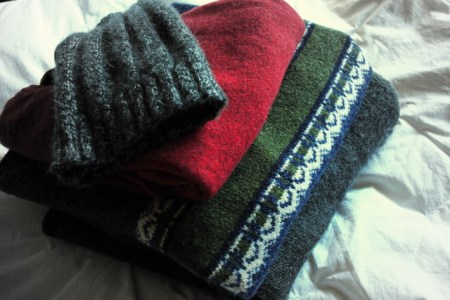
Out of all of the sweaters in both the men’s and women’s sections, the only 100% (or close) wool sweaters I found were the four in the photo above and two more in colors that wouldn’t have worked for me. The rest were mostly cotton or acrylic. I may run out to another store later in the week if I need more material.
From top to bottom:
– A lambswool/angora/nylon mix tank (who wears those?) with ribbing from Old Navy
– A 100% wool sweater from Benetton
– A 100% lambswool sweater with a patterned stripe from Structure
– A 100% wool sweater from the Gap that is so big I may have multiple plans for it
A source online recommended putting sweaters from thrift stores into the dryer for 30 minutes to kill any possible bedbugs or their eggs, so I did that first. I had previously thought that it was the drying process that felted sweaters, but it turns out it’s actually the hot water and the agitation in the machine that does it. You can also felt by hand via multiple different methods. Since this is my first time I’m going to stick with the machine.
Tune in tomorrow to see if it works!


 50 First Crafts
Leave a reply to Colleen Cancel reply